
'...but could demotivate employees seeking US residency.'

Tata Sons Chairman N Chandrasekaran affirmed India's robust economic position amidst global uncertainty, emphasising that energy security, advanced manufacturing jobs, and investment in human capital are 'critical' for sustaining the nation's long-term growth.

Marco Rubio will visit Mumbai and Jamnagar to discuss energy cooperation as S Jaishankar says India-US trade talks are nearing a landing point, with a few issues unresolved.

India's Chief Economic Advisor V Anantha Nageswaran stated that the country's balance of payments (BoP) pressure is expected to remain a continuous challenge due to rising imports, commodity dependence, high global interest rates, and intense competition for capital.

India's foreign trap shooting coach, Peter Wilson, has voiced his disappointment over the exclusion of World Championship bronze medallist Zorawar Singh from the Asian Games squad. Wilson highlighted Zorawar's calibre and the "great shame" of his omission, attributing it largely to the National Rifle Association of India's (NRAI) selection policy which prioritises domestic trials over international results. He also addressed the Indian shotgun team's recent poor World Cup performances and discussed the need for systemic changes to improve access to shotgun shooting in India.

Union Finance Minister Nirmala Sitharaman expressed strong confidence in India achieving over 10 per cent economic growth, advocating for increased technology adoption and innovation. She urged overcoming scepticism and highlighted technology's transformative role in agriculture and public sector reforms, while also launching a new fund and book at an IIT Madras event.

The Delhi High Court has ruled that foreign nationals do not possess an inherent or legally enforceable right to enter India, even if they hold a valid visa. The court emphasised that entry is a sovereign function, subject to national security, foreign policy, and administrative discretion. This observation came while dismissing a plea from a Turkmenistan national who was denied entry despite having a business visa, citing adverse inputs and national security concerns.

The trophy is supposed to be the full stop to a tournament, not another comma in an India-Pakistan controversy, points out K R Nayar.

An intensified DVAC probe into a multi-crore liquor scam, allegedly involving former DMK Minister V Senthil Balaji, has led to a suggestion to privatise retail liquor sales in Tamil Nadu. The investigation targets alleged collusion in TASMAC bar licences, transport tenders, and procurement, with the Madras High Court dismissing Balaji's anticipatory bail plea. The FIR details systemic corruption, significant revenue loss, and illicit fund generation, prompting political reactions.

Former NITI Aayog vice-chairman Rajiv Kumar has urged the government to maintain zero-fee UPI transactions for several more years, arguing that the benefits of UPI as a public good outweigh the costs. This comes amidst the government's recent decision to introduce a 0.4% fee on person-to-merchant UPI transactions above Rs 2,000 from October 15, a move that has drawn criticism.

India needs to move beyond ease and cost of doing business and focus on the "speed of doing business" as the next leg of reforms to sustain economic growth and private investment, Confederation of Indian Industry (CII) President R Mukundan said.

The Indian corporate sector demonstrated strong credit quality in the first half of FY27, driven by robust balance sheets and healthy liquidity, despite facing risks from elevated crude prices, inflation, and global interest rates.

The Indian government has introduced a 0.4% transaction fee on UPI payments above Rs 2,000 for merchants, effective October 15, sparking a political row. The Congress party has labelled it a "Modi tax" and accused the government of succumbing to US pressure, while the BJP has defended the move, clarifying that consumers will not be charged and small vendors are protected. The finance ministry reiterated that the charge is on merchants, not customers.

Finance Minister Nirmala Sitharaman announced that the Goods and Services Tax (GST) Council's October 7 meeting will focus on 'GST 2.0' process reforms, including e-invoicing and input tax credit rules, while also addressing complex issues surrounding the taxation of the digital economy and cryptocurrency.

The GST Council, chaired by Finance Minister Nirmala Sitharaman, has begun deliberations on significant reforms, including decriminalising nine offences, softening provisions for 24, and raising the threshold for criminal prosecution to Rs 5 crore. The proposed changes also include scrapping the arrest powers of GST officers and introducing an 'invoice matching system' to combat fake input tax credit claims, aiming for a trust-based taxation approach and enhanced ease of doing business.

Jammu and Kashmir has begun the deportation process for Bangladeshi nationals allegedly staying illegally in the region, with 150 individuals already shifted to West Bengal. This action follows a survey identifying around 600 illegal immigrants and coincides with the Union Home Ministry's High-Level Committee on Demographic Change (HLCDC) investigating illegal immigration across India.

Reserve Bank of India (RBI) Governor Sanjay Malhotra stated that surplus liquidity in the banking system is expected to drain within the current financial year, utilising tools like currency leakage, sell-buy swaps, open market operations (OMOs), and variable rate operations.

Industry leaders at MRAM Expo 2026 highlighted that India's maintenance economy has the potential to unlock a 1 per cent GDP opportunity. This growth can be achieved by addressing productivity losses from equipment breakdowns, unplanned downtime, and inefficient assets through smarter asset management practices. The NITI Aayog also supports AI-based predictive maintenance for resilient infrastructure, while the Indian Asset Performance Management market is projected for substantial growth by 2033.

Patrice Caine, Chairman and CEO of Thales, highlighted Artificial Intelligence as both a major cybersecurity challenge, accelerating attack speed and autonomy, and a crucial tool for defenders. He also warned about quantum computing's future threat to encrypted data. Thales introduced new AI-powered solutions like Luna 8 and CipherTrust DSPM at its Cyber Summit 2026 to combat these evolving threats.

Delhi Police has registered an FIR against Cockroach Janta Party (CJP) leaders Saurav Das, Ashutosh Ranka, and other members for allegedly trespassing into the Jantar Mantar area, which was recently denotified as a protest site. CJP founder Abhijeet Dipke has condemned the detentions as 'kidnapping' and questioned the legality of preventing lawyers from meeting the detained members.
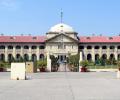
Allahabad High Court Justice Vinod Diwakar has raised significant concerns regarding the functioning and transparency of full court meetings, noting that individual judges' views are not recorded and that meetings are infrequently held. His judgment calls for a more balanced and accountable approach to high court administration, highlighting issues of perceived "stage-managed" proceedings and lack of accountability in administrative decisions.

Researchers have outlined five crucial actions to help the world prepare for a potentially strongest-on-record El Nino, aiming to reduce its severe health consequences like infectious diseases, malnutrition, and heat-related conditions. These recommendations, published in The Lancet, emphasise a comprehensive risk overview and early preparatory measures.

Former Rajasthan chief minister Ashok Gehlot has criticised the Centre for introducing a 0.4% charge on UPI transactions above Rs 2,000, alleging the decision was influenced by pressure from the United States and its payment companies like Visa and Mastercard. He highlighted a perceived shift in the government's stance on Merchant Discount Rate (MDR) for UPI, claiming it would ultimately burden consumers and small businesses while benefiting American firms.

BJP legislators in Karnataka protested during a special legislative session by reciting the full version of Vande Mataram after the official recording played in the Assembly and Council ended after only two stanzas. The Congress government in the state has a standing order to play only the first two stanzas at its programmes, except for high-profile events.

A report by Scholars at Risk, 'Free to Think 2026', states that academic freedom in India is "severely restricted" due to increasing government influence over higher education, university governance, and curbs on student expression. India is listed among six countries in this category, with its Academic Freedom Index score sharply declining. The report cites instances of faculty dismissals, event cancellations, and pressure on student protests, highlighting the alleged use of the UGC as a vehicle for state influence.

The Supreme Court has refused to grant an interim stay on the imposition of Merchant Discount Rate (MDR) on UPI person-to-merchant transactions exceeding Rs 2,000, which is set to take effect from October 15. The court has agreed to examine the challenge to this new fee and has issued notices to the Centre, RBI, and NPCI, seeking their responses within four weeks. A Public Interest Litigation (PIL) argues that the levy lacks statutory safeguards, transparency, and public consultation, and could adversely affect merchants and consumers.

Former DGP R Sreelekha has questioned the Kerala government's proposal to grant menstrual leave for schoolgirls, raising concerns about privacy and whether it empowers or weakens girls.

If India's medal tally ultimately falls significantly short of Hangzhou, the conversation should not stop with the athletes or coaches. It should extend to a much more uncomfortable institutional question: After years of increased investment, programmes, infrastructure and policy attention, where exactly is the system failing to convert that investment into medals, champions and depth across sports? asks Jaydeep Ray.

'While the population remains relatively young, its age structure is beginning to shift, setting the stage for a much older population later this century.'

The Congress party has strongly refuted government claims that its MPs on the Parliament Standing Committee on Finance supported a fee on high-value UPI payments. Congress leaders, including Gaurav Gogoi and Manish Tewari, stated that the "UPI tax" proposal was not specifically discussed by the committee, accusing the Modi government of diverting attention from public backlash and appeasing US companies. The government, however, cited the committee's report which pressed for a tiered Merchant Discount Rate (MDR) framework.

Reliance Industries Ltd (RIL) has successfully raised a total of Rs 25,000 crore through domestic bond issues in September, including a recent Rs 13,000 crore 10-year bond at 7.90 per cent, as it prioritises funding certainty amidst expectations of a possible RBI rate hike and rising borrowing costs.

Prime Minister Narendra Modi, speaking at the UPSC centenary, urged a fundamental shift in civil services recruitment and governance. He highlighted the need for services to adapt to an "instant-delivery world" powered by AI, focusing on citizen-centricity and evaluating candidates' motivation beyond academic knowledge. The PM also praised Captain Smit Machchhar's bravery during his address.

India has clarified its policy regarding participation in the 2027 South Asian Federation (SAF) Games in Pakistan, stating decisions will align with national sports policies and international governing bodies. While bilateral sporting engagements with Pakistan remain suspended, Indian athletes are permitted to compete in multilateral events. The government also aims to simplify visa processes to position India as a global sports hosting destination.

There are only bad and worse options before him, points out Aakar Patel.

The opposition has strongly criticised the government's decision to introduce a 0.4% Merchant Discount Rate (MDR) on UPI transactions above Rs 2,000 for merchants, effective October 15. They allege the move is a result of US pressure and will lead to increased commodity prices, calling it a "betrayal" of the common man. The government, however, clarifies that customers will not be charged, and the MDR applies only to merchants for larger transactions.

Congress leader Rahul Gandhi arrived in Chennai on Saturday for the sixth edition of 'Chhatron Ki Goonj,' a youth outreach programme. He is scheduled to meet Chief Minister C Joseph Vijay, marking their first interaction since the formation of the SSJV alliance and TVK joining the INDIA bloc. The visit includes an unscripted interaction with students at Island Grounds, focusing on critical issues, amidst tight security arrangements.

The Karnataka government is reviewing its data centre policy to prioritise sustainability due to concerns about the significant water and energy consumption of data centres. The government is exploring coastal locations like Mangaluru for future data centre development and focusing on smaller-scale data centres.

The Congress party has criticised the government's new 0.4% charge on UPI transactions above Rs 2,000 for merchants, terming it a "Modi tax". Opposition leaders, including Rahul Gandhi and Mallikarjun Kharge, allege that this move will ultimately burden consumers through price hikes and accuse the government of succumbing to American pressure to dilute India's zero-MDR policy. The government states the charge will support banks and fintechs.

The Indian rupee experienced its sharpest single-day decline in eight weeks, settling at 94.83 per dollar, primarily due to escalating crude oil prices and persistent risk-off sentiment driven by heightened geopolitical tensions and limited foreign inflows.

Union Minister Ashwini Vaishnaw warned of increased global turbulence from tech disruptions, AI, and financial risks in the coming years. He stated that India is strengthening its economic and technological resilience to protect its growth from external shocks. India is focusing on domestic manufacturing and design in critical tech areas while maintaining global integration, with trust becoming as crucial as cost in supply chains.
